Dental Implants in Edinburgh: What the Process Involves and Why Links Dental Practice Is the Right Place to Start
Dental implants are the most permanent and natural-feeling solution available for replacing a missing tooth, and for patients who are suitable they are almost always the first recommendation. But the process is more involved than most people expect when they first start researching, and the quality of the result depends enormously on the skill and experience of the team delivering it.
Links Dental Practice is based in Bruntsfield, Edinburgh, and has built a reputation as one of the most recognised dental practices in the city. With a 4.8-star rating across 306 Google reviews and multiple award wins including Best Team, Best Private Practice, Best Patient Care, and Best Treatment of Nervous Patients, the standard of care is reflected consistently in what patients say about their experience here.
Why Choose Links Dental Practice for Dental Implants in Edinburgh?
Choosing the right provider for implant treatment is one of the most significant dental decisions you will make. Experience, technology, and the quality of clinical care throughout the process all affect the outcome.
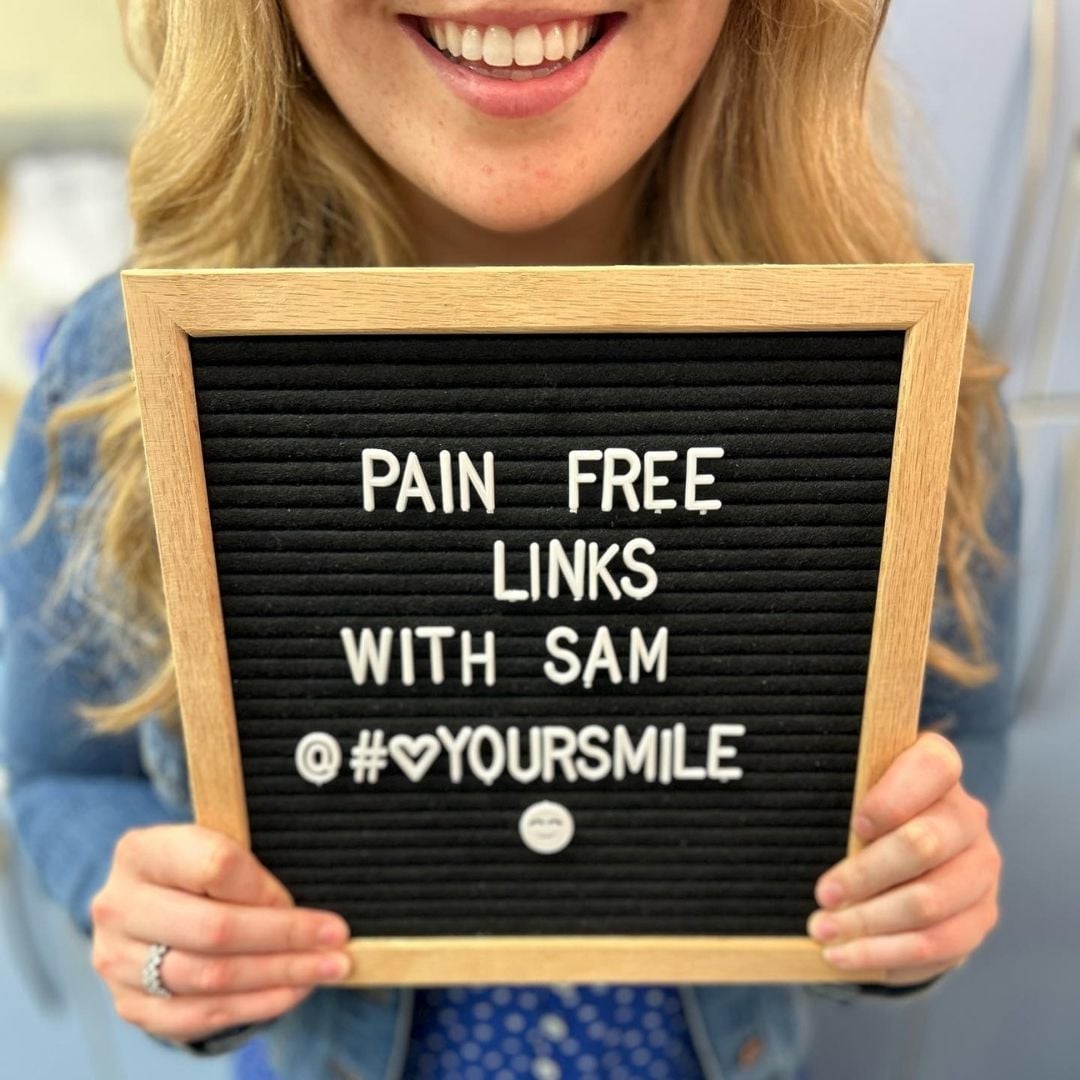
At Links Dental Practice, implant treatment is supported by advanced technology and a team that includes a dedicated oral surgeon in Julie Burke, alongside dentists with extensive experience in complex restorative and cosmetic cases. The practice uses laser-assisted implant techniques backed by a lifetime warranty, and pain-free treatment is a written guarantee: if you feel pain during any private procedure, your treatment visit is free.
The practice has also invested in Waterlase technology, allowing many procedures to be carried out without the need for a conventional drill. This approach to minimally invasive dentistry runs through every aspect of the clinical experience at Links.
Patients describe the practice in specific, detailed terms. One patient who underwent extensive treatment wrote: “I required extensive dental work and registered with Links Dental Practice. Everyone from my dental surgeons to the reception staff treated me with professionalism and kindness. I was extremely nervous prior to my treatment beginning but my concerns were alleviated at my initial appointment.” Another patient wrote simply: “This place has totally changed my mindset when it comes to going to the dentist. I can honestly say I felt zero pain.”
What Is a Dental Implant?
A dental implant is a small titanium post placed surgically into the jawbone where a tooth root used to be. Over several months, the bone grows around and fuses with the post in a process called osseointegration. Once that bond is confirmed, a custom-made crown is attached on top.
The result is a replacement tooth anchored directly into the jaw. It does not move, does not rely on neighbouring teeth for support, and requires no special maintenance beyond normal brushing and flossing. Most patients describe the finished result as completely indistinguishable from their natural teeth.
Why Implants Are the Gold Standard for Missing Teeth
When a tooth is lost, the jawbone at that site begins to lose density. A natural root transmits biting forces into the bone every time you eat, and without that stimulation the bone slowly resorbs. Over time this affects the shape of the jaw, the stability of neighbouring teeth, and in cases of multiple missing teeth, the appearance of the face.
Dentures and bridges replace the visible tooth but do nothing to prevent this bone loss. An implant is the only tooth replacement that replicates the function of a root, stimulating the bone and maintaining the structure that would otherwise be lost.
Beyond bone preservation, implants offer a level of stability and natural function that other restorations cannot match. With proper care, they are designed to last a lifetime.
Who Is Suitable for Dental Implants in Edinburgh?
Most healthy adults who are missing one or more teeth are potentially suitable for implants. The key requirements are sufficient bone volume at the implant site, healthy gums, and good general health to support healing after a minor surgical procedure.
Patients who have had a missing tooth for some time may have experienced bone loss at the site. In many cases this can be addressed with bone grafting before or at the time of implant placement.
Active gum disease needs to be treated and stable before an implant is placed. Uncontrolled gum disease around an implant is one of the main causes of failure, so this is always addressed first. The practice has specific expertise in laser-assisted periodontal treatment, with hygienist Moon Kazi carrying out periodontal work to the highest standard.
Smoking increases implant failure rates and your dentist will discuss this honestly with you at your consultation. Medical conditions that affect healing require individual assessment.
The only reliable way to know whether implants are right for your situation is a thorough clinical assessment. At Links Dental Practice, that process begins with a complimentary consultation with the Smile Advisor, who will walk you through your options with no commitment and no pressure.
The Dental Implant Process at Links Dental Practice
Your Complimentary Consultation
Your first step is a complimentary consultation with the Smile Advisor at Links Dental Practice. This is a conversation about your goals and concerns, not a clinical appointment. The practice has won awards for its treatment of nervous patients and the consultation reflects that — patients consistently describe feeling listened to, informed, and completely unpressured.
Clinical Assessment and Planning
Your dentist will carry out a full examination including digital X-rays and 3D imaging to assess bone volume and anatomy at the implant site. Where appropriate, Julie Burke, the practice’s oral surgeon, is involved in complex cases requiring surgical planning. A detailed treatment plan is built covering every stage, the full timeline, and a complete written breakdown of costs before anything moves forward.
Any Preparatory Treatment
If the tooth is still present it is extracted first. If bone grafting is needed it takes place at this stage and is given time to heal before implant placement. Not every patient requires preparatory work, but when it is needed it is the foundation for a lasting result.
Laser-Assisted Implant Placement
Links Dental Practice uses laser-assisted implant techniques for a more precise and minimally invasive approach. The placement is carried out under local anaesthetic using the practice’s five-step pain-free protocol: numbing gel applied first, warmed anaesthetic, the shortest and finest needles, a slow injection rate, and a computer-assisted delivery system. The practice’s comfort menu is available throughout, offering noise-cancelling headphones, eye masks, and other options to make the experience as relaxed as possible.
Healing and Osseointegration
The implant is left to fuse with the bone over three to six months. Check-up appointments monitor progress during this period but there is no active treatment. A temporary restoration keeps the gap closed while healing takes place.
Your Crown
Once osseointegration is confirmed, a digital scan or impressions are taken to fabricate your custom crown. The crown is matched to the colour, shape, and size of your surrounding teeth. When it is fitted, the implant is complete and fully functional.
Oral Surgery Expertise at Links Dental Practice
One of the distinguishing features of Links Dental Practice is the presence of Julie Burke, a dedicated oral surgeon, as part of the clinical team. For complex implant cases involving surgical planning, bone grafting, or situations where a general dental approach needs specialist input, having an oral surgeon in-house means patients can receive the full scope of their treatment at the practice rather than being referred elsewhere.
Full Mouth Dental Implants in Edinburgh
For patients who are missing multiple teeth or who require a full arch restoration, Links Dental Practice offers comprehensive full mouth implant solutions including implant-supported dentures and same-day teeth on implants.
A full assessment and treatment plan will give you a clear picture of what is involved and what the cost looks like before any decisions are made. The team at Links has the clinical depth to handle complex full arch cases in-house.
How Long Do Dental Implants Last?
With proper care, the implant post is designed to last a lifetime. The crown may need replacing after 15 to 20 years depending on wear, but the implant itself rarely requires intervention once it has successfully integrated.
Good oral hygiene and regular check-ups are the main requirements for long-term success. The hygiene team at Links Dental Practice, led by Moon Kazi, supports patients in maintaining the health of both their implants and their natural teeth at every routine appointment.
Dental Implant Costs and Finance Options in Edinburgh
The cost of a dental implant depends on how many are being placed, whether preparatory work is needed, and the type of crown used. A complete written breakdown of costs is provided before any commitment is made. This is one of the practice’s five written promises.
Finance options are available to help spread the investment, and these are discussed at your complimentary consultation so you have a clear picture of your monthly commitment before agreeing to anything.
Book Your Complimentary Consultation at Links Dental Practice, Edinburgh
Links Dental Practice is at 101 Whitehouse Loan, Edinburgh, EH9 1AT, in Bruntsfield. The practice is open Monday until 8:30pm and Tuesday until 8pm, with extended weekday hours making it accessible for working patients. Saturday appointments are available on alternate weeks. Call 0131 516 9278 or book your complimentary consultation online at linksdentalpractice.co.uk.
Frequently Asked Questions
Who carries out dental implants at Links Dental Practice in Edinburgh?
Implant treatment at Links Dental Practice is supported by a team that includes a dedicated oral surgeon, Julie Burke, alongside experienced restorative dentists including Sam Lockhart, whose clinical excellence has been recognised through individual award recognition. The practice uses laser-assisted techniques and backs every implant with a lifetime warranty.
Are dental implants painful in Edinburgh?
Links Dental Practice guarantees pain-free treatment backed by a money-back promise. Implant placement is carried out using a five-step pain-free protocol and the practice’s comfort menu is available throughout. As one patient wrote: “All of the procedures were painless and carried out in a calm, relaxed atmosphere.”
How long does the dental implant process take in Edinburgh?
From consultation to fitted crown, most single-tooth cases take between six and twelve months. The majority of that time is the osseointegration phase rather than active appointments. Cases requiring bone grafting take a little longer but the final result is the same.
Can I get a dental implant if I have had a missing tooth for several years?
In most cases yes, though bone loss at the site may mean grafting is needed before placement. Your dentist will assess bone volume with imaging at your consultation and advise clearly on what is involved. Acting sooner is always simpler, but patients who have had a gap for years are frequently still suitable for treatment.
Does Links Dental Practice offer finance for dental implants?
Yes. Finance options are available to help spread the cost of implant treatment. These are discussed at your complimentary consultation so you know your full monthly commitment before agreeing to anything.
Are dental implants available on the NHS in Edinburgh?
NHS provision for dental implants is very limited and typically restricted to specific clinical criteria. In most cases implants are provided privately. Links Dental Practice offers finance options to help make the investment manageable.
What happens if I do not replace a missing tooth?
Leaving a gap leads to gradual bone loss at the site, drifting of neighbouring teeth, and changes to your bite over time. These effects compound and make future treatment more complex. Replacing a missing tooth promptly is considerably simpler and more cost-effective than addressing the secondary problems that develop if the gap is left untreated.